
A Paul Klee exhibition on the Jewish Museum in New York opened as deliberate on 20 March—besides that its centrepiece was lacking.
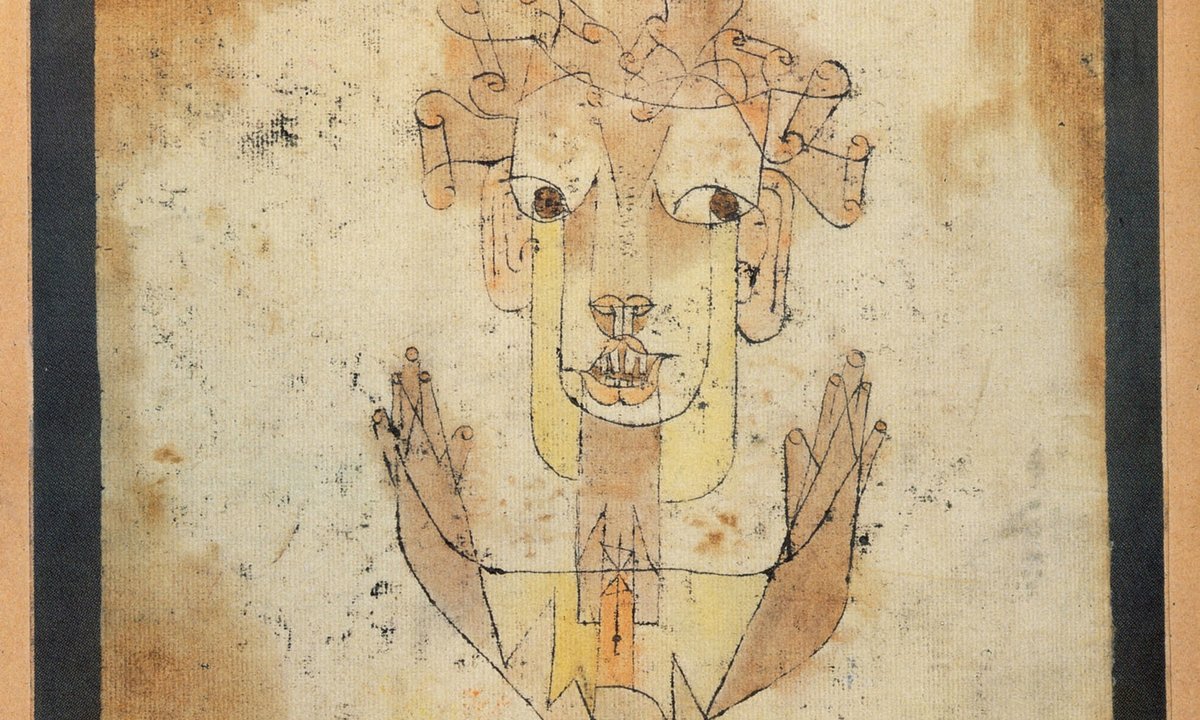
Angelus Novus (1920), an oil and watercolour work on paper, stays caught in Israel as a result of the Iran warfare has disrupted air mobility throughout the area. “Resulting from present situations affecting worldwide transport, the cargo of the unique paintings has been quickly delayed,” reads an indication on the museum.
On show as an alternative is an authorised copy, set inside a recessed pink panel in an in any other case empty gallery devoted to the piece. The facsimile was presupposed to be rotated with the unique, which might solely be proven for 4 weeks at a time given its excessive sensitivity to gentle.
The exhibition, Paul Klee: Different Doable Worlds (till 26 July), focuses on the German artist’s later works, a lot of which responded to the rise of Nazism. Regardless of not being Jewish, Klee was a goal of Nazi persecution and branded by a newspaper as a “typical Galician Jew”. He was fired from the Kunstakademie Düsseldorf, his work and monographs had been burned, his works had been seized from museums and collectors, and included in Degenerate Artwork, the notorious 1937 exhibition in Munich.
Klee made Angelus Novus in 1920 utilizing his signature oil-transfer method. After coating a sheet of paper with black oil paint, he used an etching needle to switch the dry paint onto a second sheet of paper, thereby making a drawing that he painted over with watercolour.
A yr later, the work was bought by the German Jewish thinker Walter Benjamin. The 2 males’s lives had placing parallels. When the Third Reich rose to energy in 1933, Benjamin fled to France and Klee to Switzerland, the nation of his delivery. In 1940, Benjamin killed himself when he confronted deportation in Spain, three months after Klee had died from issues of scleroderma.
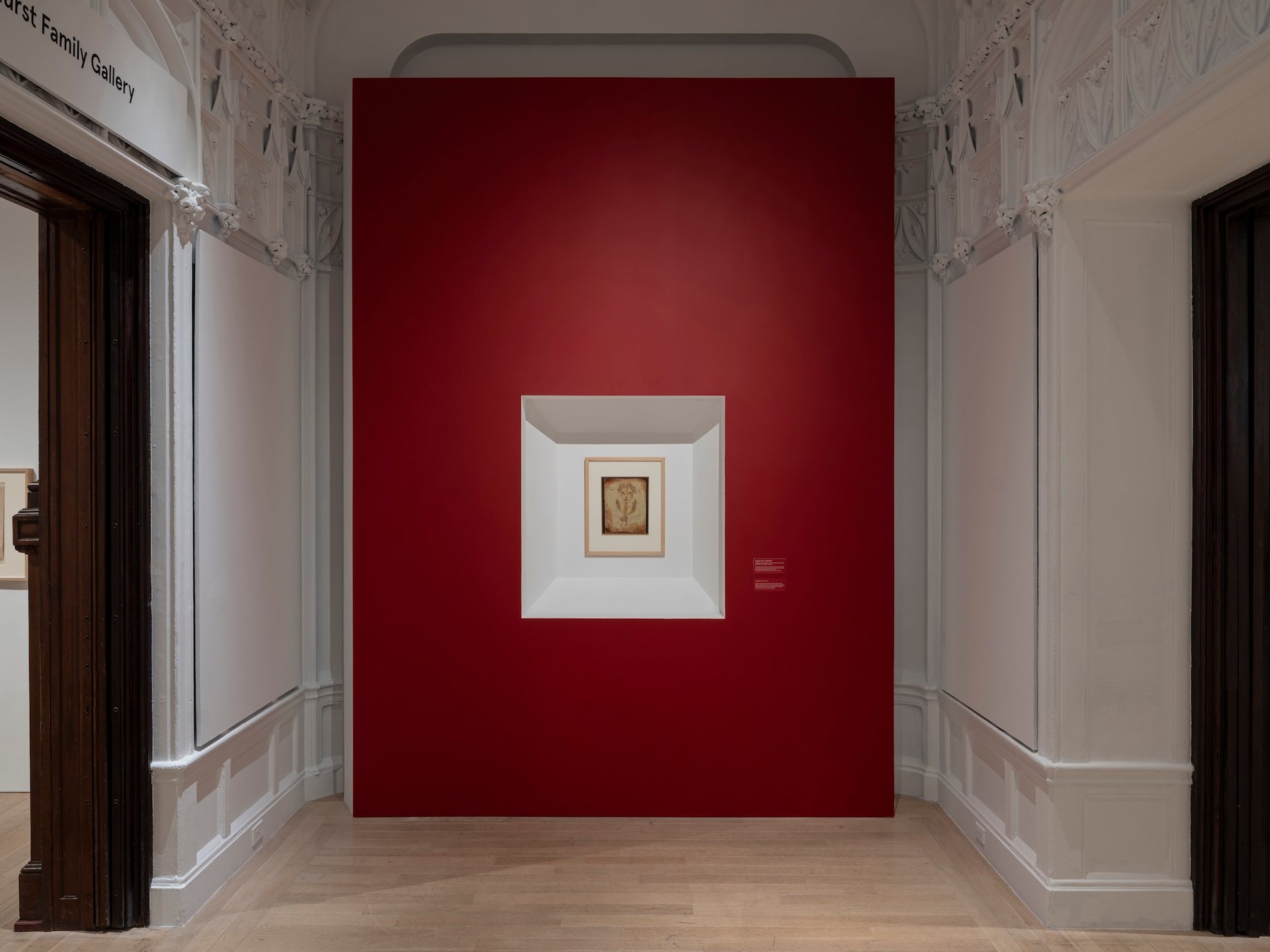
Set up view of Paul Klee: Different Doable Worlds on the Jewish Museum, New York Photograph by Kris Graves Tasks/Julian Calero
Angelus Novus was Benjamin’s most prized possession, and his darkish interpretation of the roughly A4-size work would in the end cement its legacy. In an essay written in his ultimate yr, Benjamin described the determine as an “angel of historical past” who stares again in helpless horror on the rising wreckage of the previous because the storm of progress “irresistibly propels him into the longer term”.
Since 1987, Angelus Novus has been owned by the Israel Museum, the place it’s saved underneath strict local weather situations. It was final exhibited in The Angel of Historical past, a 2025 present on the Bode-Museum in Berlin.
Though the work was created by Klee after the First World Conflict and interpreted by Benjamin throughout the Second, its affiliation with the human propensity for destruction continues to resonate at present. Neville Rowley, a Bode-Museum curator, informed The New York Instances in 2025: “There’s a permanence of this imaginative and prescient of historical past as a succession of disaster.”
Mockingly, the exhibition copy now on view on the Jewish Museum is an instance of mechanically reproduced works, which Benjamin famously criticised as missing the “aura” or “distinctive existence” of the unique.
The continuing warfare within the Center East has impacted different shipments and exhibitions within the area. When US and Israeli forces launched their warfare on Iran on the finish of February, the Tel Aviv Museum of Artwork closed and cancelled two forthcoming exhibits—on Tom Wesselmann and post-1940 Jewish artwork—together with associated shipments from New York and Vienna. Three works couldn’t be returned to the Von der Heydt Museum in Wuppertal for a Carl Grossberg exhibition.
In Dubai, the worldwide artwork truthful Artwork Dubai has been postponed from April to Might, as has the group present World Positioning System on the Jameel Arts Centre. “We really feel areas like our centres play an important function throughout moments of uncertainty,” Artwork Jameel director Antonia Carver tells The Artwork Newspaper, “and consider museums are important platforms for artists’ voices and areas for reflection.”
- Paul Klee: Different Doable Worlds, till 26 July, Jewish Museum, New York